The Freedom Series: Part 3


Every day thousands of Cambodians go to Thailand in search of a better life. They hope to earn enough money to buy food for more than one meal at a time, to purchase medicine for their loved ones, or maybe even to afford running water. Sadly, a quarter of them will be exploited—falling prey to labor and sex trafficking. Some make it out alive. Most are never heard from again. Of the estimated 27 million trafficking victims in the world today, only 1-2 percent will be rescued. Thus, prevention is key.


This excerpt, taken from Samaritan’s Purse, identifies the problems that occur in so many countries, leaving the people more susceptible to human trafficking. This reasoning has lead nonprofits, such as Samaritan’s Purse, to combat human trafficking using an upstream poverty alleviation tactic. This is the idea that when people are able to support their families and have access to food and clean water, as well as knowledge as to keep themselves safe, they are much less likely to be trafficked.


The combination of knowledge and economic tools equips people to protect themselves and rise above what can seem an endless cycle of poverty and despair. When people have access to the basics—food, water, shelter, education, health care—they are less likely to take a chance on unsafe migration.


What do you think? Do you believe that this is a viable strategy to combatting the horrors of human trafficking? How do you think this idea can be incorporated in order to both prevent future trafficking as well as aide those who are currently being abused?



The Freedom Series: Part 2

“It is important for my family and I to know that these men that hurt me are in jail, so that other children don’t suffer what I suffered.”

These words were spoken by a woman named Griselda, a survivor of sexual violence, who was helped by the International Justice Mission.

Like the International Justice Mission (IJM), there are many anti-human trafficking nonprofits that focus their efforts on prosecuting the perpetrators of these horrific crimes.

According to IJM, when the justice system in a country is not functioning as it should, the average person is much more likely to experience an act of violence against them.

“When the laws aren’t enforced, violent people can abuse, exploit and enslave others without consequence. Violence becomes commonplace.”

To  this end, IJM has had over 1,300 convictions against perpetrators of human trafficking and is currently protecting 150,000,000 people from violence. Just this past month, IJM was recognized for playing a large role in rescuing 155 enslaved people, along with 31 children from a brick kiln in Avadi, India.

What do you think? Do you believe that legal prosecution of violators of human trafficking should be a priority? Or do you think efforts would be better spent on the survivors themselves?

For more information, check out the video below or go to http://www.ijm.org.


The Freedom Series: Part 1

One of the most preemptive solutions to the issue of human trafficking is awareness. The goal behind focusing an anti-human trafficking nonprofit on raising awareness is preventing the problem before it actually happens. Another goal of awareness is to equip the general public with knowledge about how human trafficking works and the different signals that it may be taking place.

The A21 Campaign is an excellent model of an anti-human trafficking nonprofit focused on awareness and prevention. Founded in 2008 by Christine Caine, A21 has been on the cutting edge of awareness based nonprofits while still being involved with other aspects of fighting modern day slavery. A21’s Can You See Me? campaign and Walk for Freedom exemplify their passion for telling the world that slavery still exists. Along with these campaigns, A21 also seeks to educate the next generation about human trafficking, so that they can both recognize a trafficking victim when they see them and avoid being trafficked themselves. In recognition of this work, A21 was awarded the 2017 Mother Teresa Memorial Award in Mumbai, India in December.

Awareness plays a key role in stopping human trafficking from spreading. Making the general population educated eyes and ears against human trafficking can create a monumental advantage to stopping it forever.

What are your thoughts? Do you think that awareness is the cornerstone to ending the global epidemic of human trafficking? Or do you believe that awareness-based nonprofits can and should focus more on tactics to rescue people in slavery right now?

For more information, check out the video below or go to http://www.a21.org.


Introduction to The Freedom Series


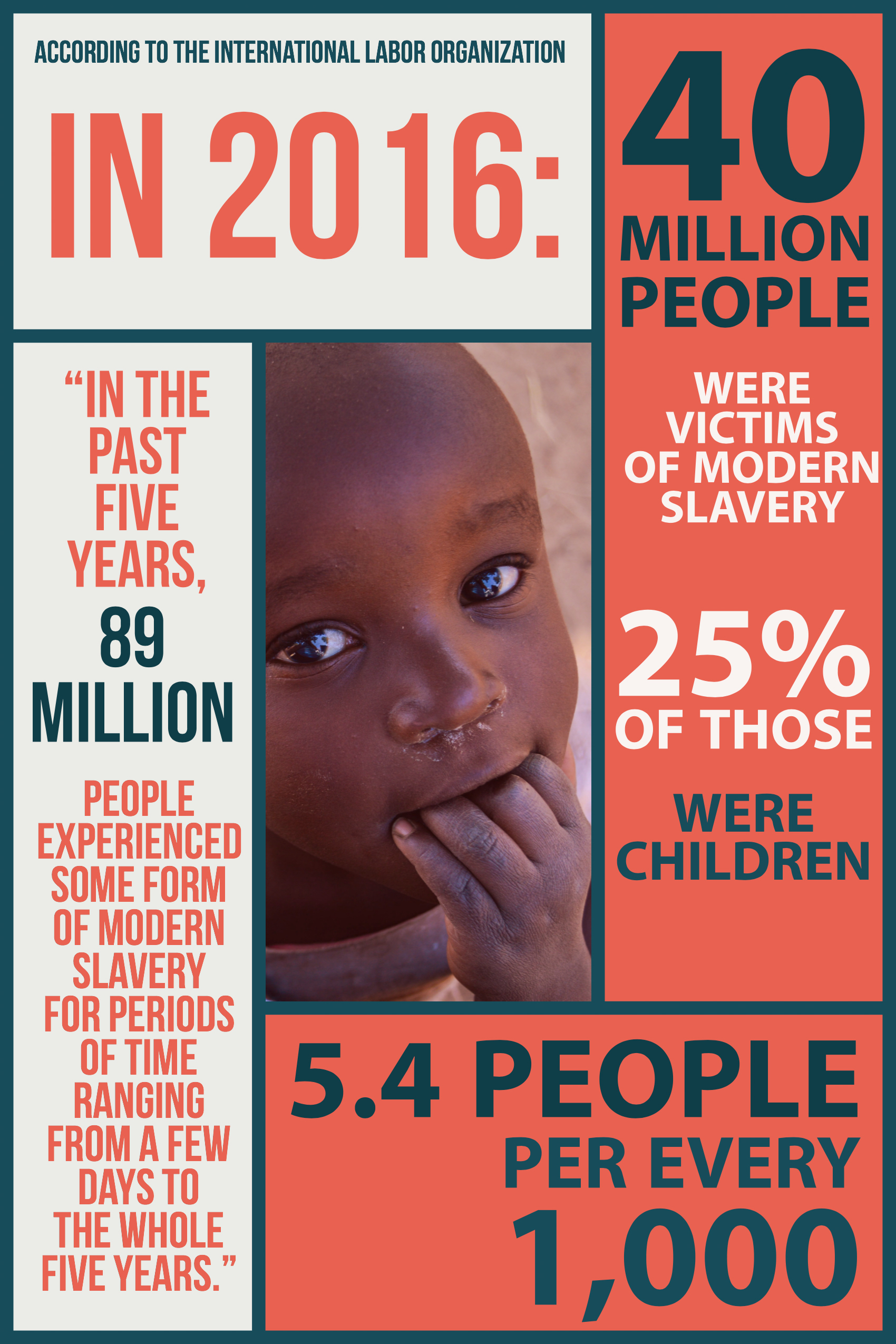
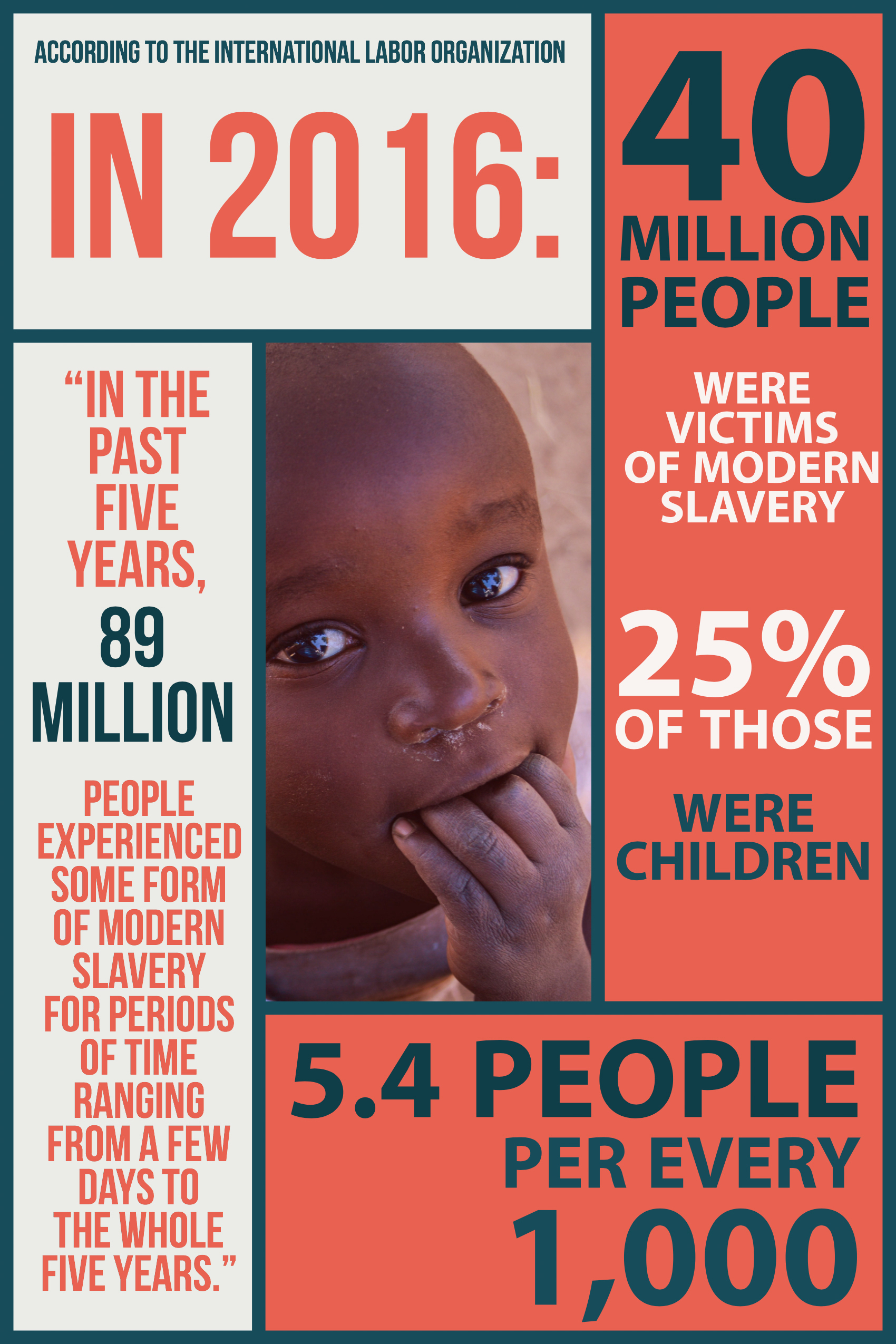
According to the International Labor Organization’s 2016 Global estimates of modern slavery: forced labour and forced marriage,

  • 40 million people were victims of modern slavery, coming to about 5.4 people enslaved for every 1,000.
  • 150 billion dollars were generated annually from human trafficking.
  • “In the past five years, 89 million people experienced some form of modern slavery from periods of time ranging from a few days to the whole five years.”

The statistics surrounding the global issue of human trafficking are overwhelming. For the next three blog posts, I will be discussing human trafficking and the different ideas for combatting it. There are three main paths in fighting this issue that I have seen nonprofits take in my research:

  • Awareness,
  • Legal Justice, and
  • Upstream Poverty Alleviation.

Please feel free to leave your thoughts and any experiences that you may have relating to this topic.